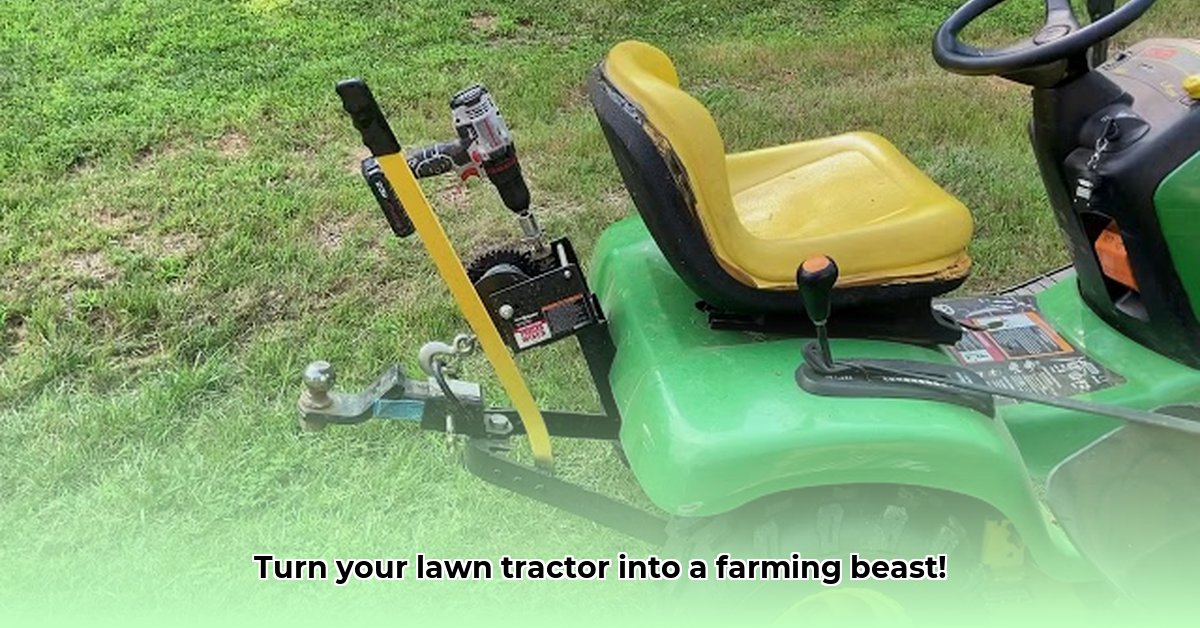
Lawn Tractor Hitches for Sustainable Agriculture: A Comprehensive Guide
This guide provides a step-by-step approach to using lawn tractor hitches for efficient and sustainable small-scale farming. We'll cover hitch selection, installation, implement choices, and crucial safety considerations. By the end, you'll be equipped to maximize your lawn tractor's capabilities for a more productive and eco-friendly farm. Did you know that using a lawn tractor with appropriate attachments can reduce labor by up to 75% for some tasks? For more information on lawn tractors with loaders, check out this helpful resource.
Choosing the Right Hitch: Category 0 vs. Category 1
Before you begin, understanding hitch categories is essential. The hitch acts as the interface between your tractor and its attachments. The two most common categories are:
Category 0 Hitches: These are smaller and lighter-duty, ideal for lighter implements like small seeders or aerators. They're a cost-effective option for smaller-scale operations.
Category 1 Hitches: These are larger and more robust, designed for heavier implements such as tillers or larger carts. They offer greater versatility for more demanding tasks.
"Choosing the correct hitch size depends entirely on the tasks you need to accomplish. Overpowering a small hitch could easily result in damage or failure.", advises Dr. Emily Carter, Agricultural Engineering Department, State University of Agriculture. Always consult your lawn tractor's owner's manual to ensure compatibility.
Essential Implements: Expanding Your Tractor's Capabilities
The right hitch unlocks the potential of various implements. These tools transform your lawn tractor into a much more versatile machine:
Tillers/Cultivators: Prepare soil efficiently, improving aeration and seedbed quality. These replace strenuous manual labor, saving significant time and improving consistency.
Seeders: Achieve precise seed spacing and depth, optimizing germination rates and crop yields. Consistent planting leads to healthier growth and higher yields compared to manual planting.
Sprayers: Apply fertilizers and pesticides accurately, minimizing waste and environmental impact. Precision spraying reduces chemical use and promotes sustainability.
Carts/Wagons: Transport materials efficiently, reducing the need for manual hauling. This saves labor and reduces the risk of injury from heavy lifting.
Aerators: Improve soil aeration and drainage, promoting healthy plant growth. Better soil health leads to increased yields and a more resilient cropping system.
Hitch Installation: A Step-by-Step Guide
Installing a hitch requires precision and attention to safety:
Consult Manuals: Review both your tractor's and the hitch's manuals for specific instructions and safety precautions.
Alignment: Carefully align the hitch with the tractor's mounting points.
Attachment: Secure the hitch using the provided hardware (bolts, washers).
Tightening: Tighten bolts securely, avoiding over-tightening which can cause damage.
Testing: Gently test the hitch's movement to ensure a stable and secure connection. Any looseness indicates a need for readjustment.
Improper installation can lead to accidents. "A properly secured hitch is non-negotiable for the safe operation of your tractor.", emphasizes Mark Olsen, experienced farmer and author of "Sustainable Small-Scale Farming Techniques."
Maximizing Efficiency and Sustainability
Lawn tractor hitches offer significant advantages for sustainable farming:
Reduced Fuel Consumption: Reduced reliance on manual labor translates to less fuel consumption.
Minimized Soil Compaction: Some implements minimize soil disturbance.
Improved Soil Health: Improved soil aeration and drainage promote healthier soil conditions.
Reduced Chemical Use: Precise spraying techniques greatly reduce the need for chemical inputs.
Increased Efficiency: Reduced labor means more time for other tasks.
Weighing the Pros and Cons
Before investing, consider the advantages and disadvantages:
| Pros | Cons |
|---|---|
| Increased versatility | Limited lifting capacity compared to larger tractors |
| Cost-effective | May require additional implement purchases |
| Improved efficiency and reduced labor | Maneuverability challenges in tight spaces |
| Relatively low initial investment | Potential need for aftermarket parts and accessories |
Conclusion: Small-Farm Success
With careful planning and safe operation, a lawn tractor equipped with a hitch becomes an invaluable tool for small-scale sustainable farming. This cost-effective solution boosts efficiency, reduces labor, and promotes environmental sustainability. Remember to prioritize safety and always consult professional resources when needed.